
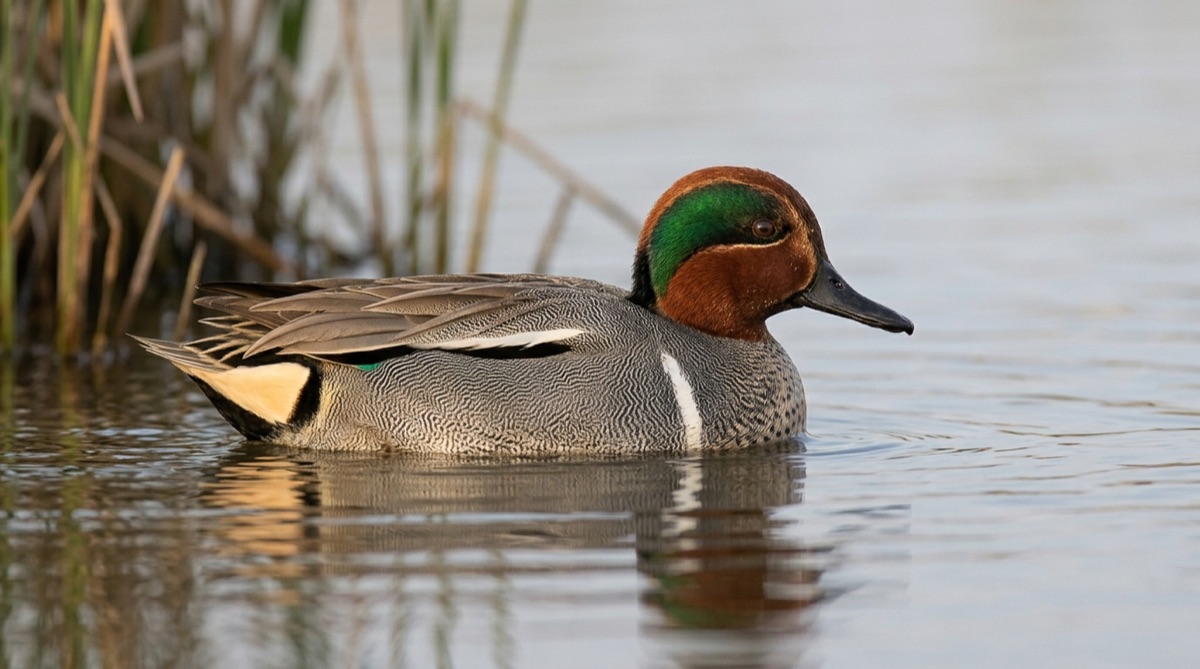
The birds · waterfowl
Anas crecca · greenwing, green-wing
Green-winged Teal.
THE SMALLEST DUCK IN NORTH AMERICA, AND THE HARDEST TO FIND ON THE GROUND.
The dog read
THE SMALLEST DUCK IN NORTH AMERICA, AND THE HARDEST TO FIND ON THE GROUND.
MeatEater puts greenwings at three-quarters of a pound and 13-15 inches. A bird that small, dead in flooded vegetation, is pure nose work. The retrieve is never about distance here; it's about finding.
THEY USE BRUSHIER WATER THAN BLUEWINGS, AND THAT CHANGES THE RETRIEVE.Sources thin
Mossy Oak notes the two species split habitat: bluewings prefer open areas while greenwings spend more time in brushy sites with woody cover along the shoreline. Same size bird, harder cover. Expect blind retrieves into shoreline tangle rather than clean water marks.
TWO SEASONS, TWO OPPOSITE RISKS.
Ducks Unlimited's research notes greenwings stay farther north than the other teal, often holding with the greenheads. Mossy Oak's practical version: greenwings tolerate cold better than bluewings and migrate later. So the same species is shot in September heat and December ice, heat management one month, cold-water and shelf-ice management the next. Read the calendar, not just the bird.
EARLY SEASON: SAME HEAT RULES AS BLUEWINGS.
Ducks Unlimited's early-teal caution applies, overheating, snakes, alligators in the southern range. Short sessions, real rest, water in the blind bag. But note the mix: Mossy Oak's rule of thumb is roughly 80% of early-season teal are bluewings and 20% greenwings.
LATE SEASON: SAME COLD RULES AS MALLARDS.Sources thin
Greenwings hold into hard weather, so a December dog faces ice, cold water, and the shelf-ice problem, see the mallard entry.
THEY COME IN LOW, FAST, AND IN TIGHT GROUPS.Sources thin
MeatEater's description is apt, teal materialize out of nowhere, buzzing low and fast in a zigzag. Multiple birds fall at once in a small area. Marking and steadiness matter more than range.
Where and when
Shallow water, ponds, marshes, moist-soil units, mudflats, flooded timber edges, and brushy shoreline. Oregon's wildlife agency describes greenwings as primarily winter migrants there, dabbling in shallow ponds and marshes and feeding at the surface by tipping up. More cold-tolerant than bluewings; they arrive later and stay well into the regular season. Early teal seasons and regular duck seasons are different regulatory frameworks. ID NOTE: hen greenwings are drab mottled brown and easily confused with hen bluewings and cinnamons. The tell is the emerald speculum, and a noticeably smaller bird with a shorter, finer bill than a bluewing's.
Hazards to the dog
- Early season: heat and overheating, venomous snakes, alligators in the southern range, mud
- Late season: cold water, shelf ice, current
- Brushy shoreline cover, eyes and footing on retrieves
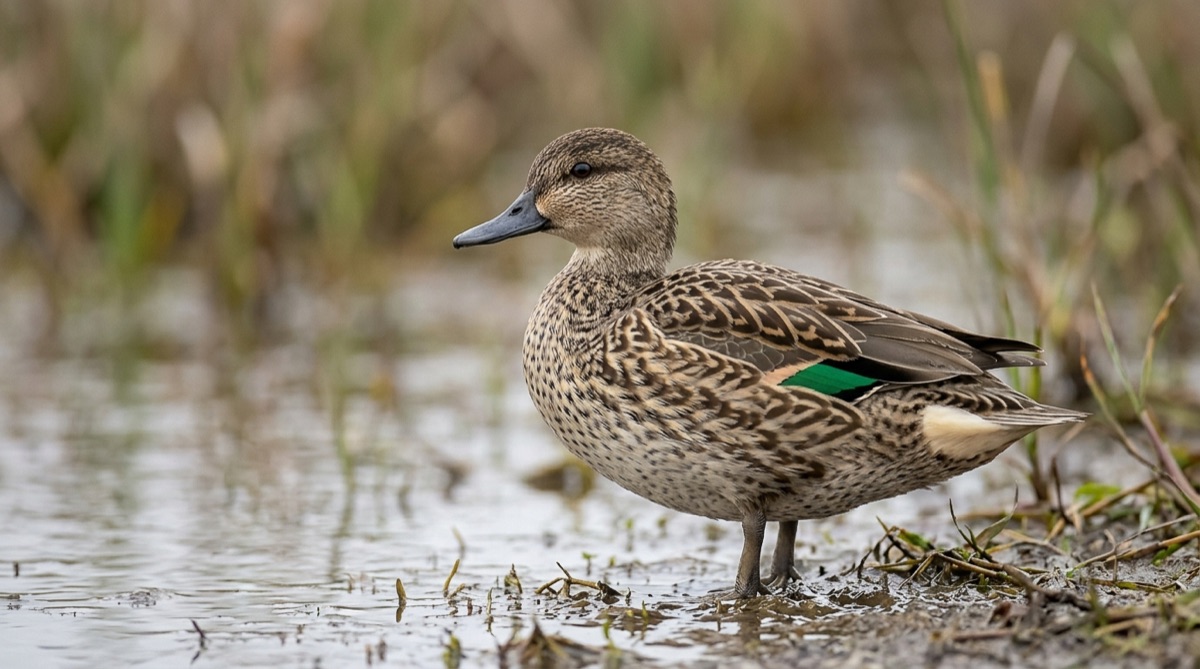 HenDrake
Sources: Green-winged Teal (Audubon / Oregon DFW / Illinois DNR) · Greenwing biology (Ducks Unlimited) · Teal species split (Mossy Oak) · Teal hunting (MeatEater) · Teal coverage (Field & Stream). Reviewed by Chad McClellan. Where sources disagree the page says so; KENAI does not settle a contested read.
The green-winged teal guides.
Three KENAI guides for this bird: first season, second season, the advanced field guide. Give us an email and they open here; you get the Weekly Read with them. Unsubscribe any time.
No spam, ever. Weekly, and only when there is something worth reading.
This bird, in the field, with your dog.
Log a hunt on green-winged teal and the KENAI app opens this read beside your dog’s record, with the morning’s conditions and THE KENAI INDEX for the day. Free to start.
Get the app