
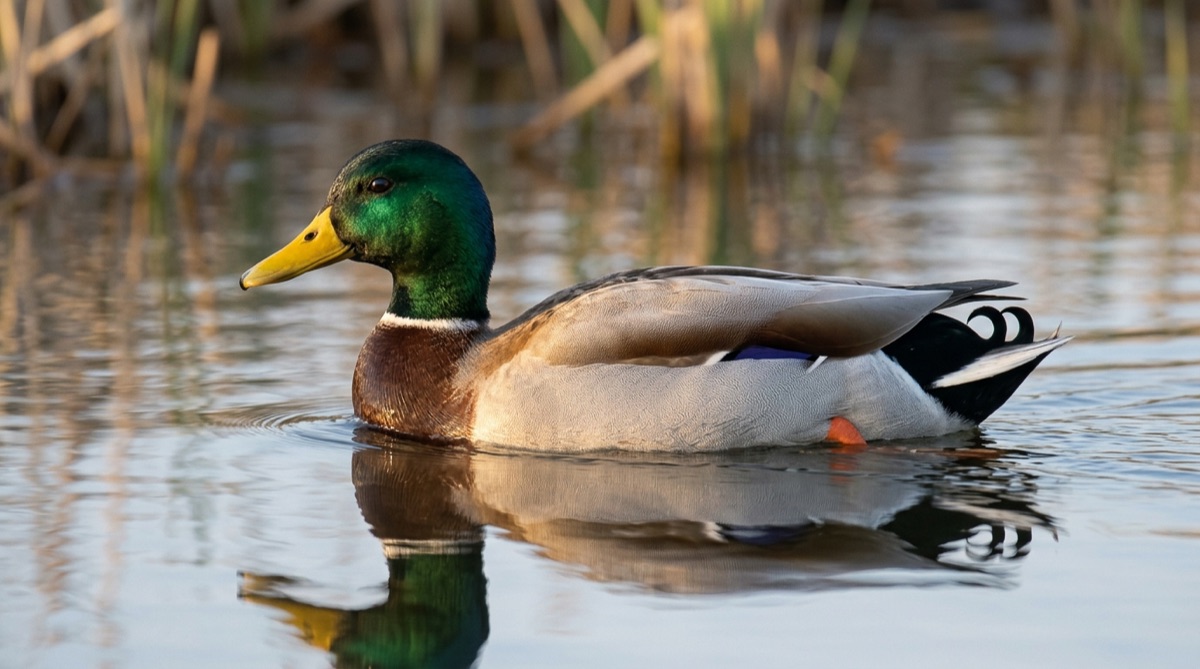
The birds · waterfowl
Anas platyrhynchos · greenhead, susie
Mallard.
COLD WATER IS THE RISK, NOT THE BIRD.
The dog read
COLD WATER IS THE RISK, NOT THE BIRD.
Shooting Sportsman, quoting a sporting-dog researcher, reports the leading injury to duck dogs is the same one that affects hunters: hypothermia. A dog's normal temperature runs 101-102.5°F; hypothermia begins below 95°F. Cold retrieves followed by long wet sits on a stand are what drop core temperature.
SHELF ICE IS THE MOST DANGEROUS RETRIEVE A DUCK DOG MAKES.
Ducks Unlimited names it directly: the most hazardous retrieve is one requiring a dog to climb onto shelf ice from open water. The guidance is to break the ice up if possible, and if you can't be confident the dog can push off the bottom to climb out, hunt somewhere else. Never send a dog onto ice after a bird, ice is thinnest toward the middle.
KEEP RETRIEVES SHORT WHEN IT'S COLD.
Realtree's rule: no doubles, triples, or long blind retrieves that keep a dog in freezing water too long. Dry the dog between retrieves. Keep it out of the water while waiting, a stand in timber, dry ground in the marsh.
THE DOG WILL TELL YOU FIRST.
A Wisconsin conservation warden's read: if a dog that never hesitates suddenly hesitates on a retrieve, that's the dog saying it's time to stop. Shivering, listlessness, and disorientation are what handlers watch for.
CRIPPLES ARE WHY THE DOG IS THERE.Sources thin
A hit mallard swims, dives, and hides in cover. Marking the fall and getting the dog on it fast is the difference between a bird in the bag and a bird lost.
Where and when
Everywhere ducks are, flooded timber, prairie potholes, river sloughs, sheet water on ag fields, big water. The most harvested duck in North America by a wide margin. Late season concentrates birds on whatever water stays open. ID NOTE, matters legally: hen mallard versus hen gadwall is the field's most common misidentification. The mallard hen's bill is orange with a dark saddle across the top; the speculum is blue-violet bordered by white on both edges. Bag limits are sex-specific in most flyways.
Hazards to the dog
- Shelf and skim ice, the leading cause of serious incidents
- Cold-water exposure on long or repeated retrieves
- Current in rivers and sloughs
- Steep or muddy banks a dog can't climb out of
- Broken ice edges, cuts to chest and hind legs
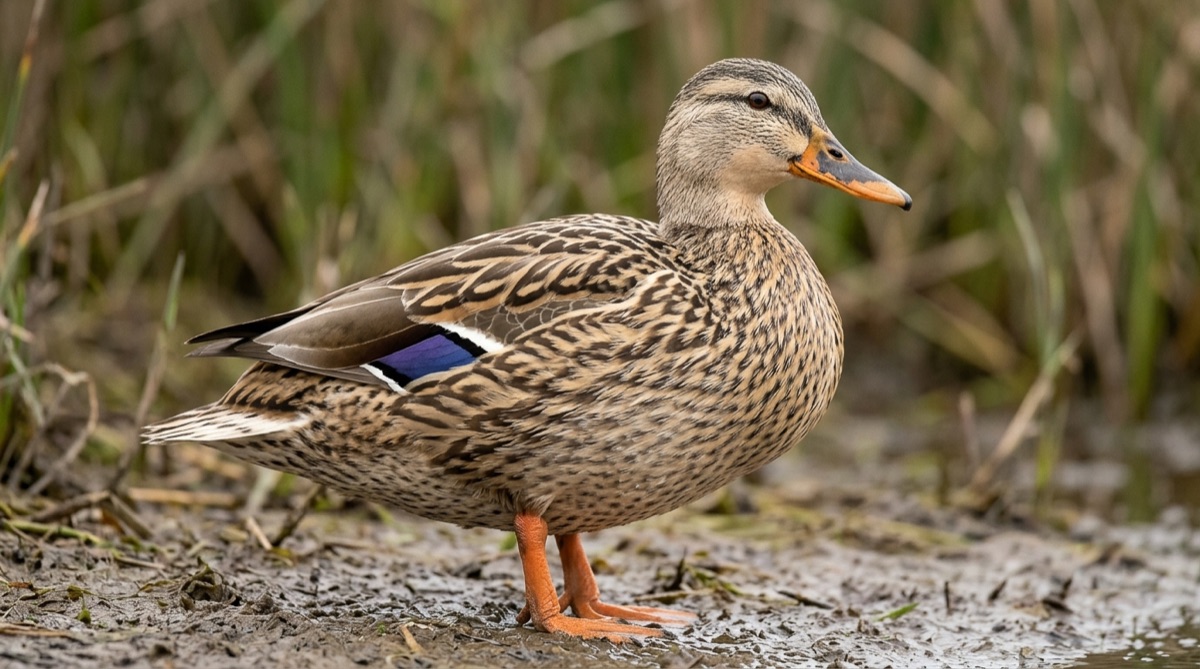 HenDrake
Sources: Mallard (Audubon / Oklahoma DWC / USGS) · Cold-water dog safety (Ducks Unlimited) · Duck dog injuries (Shooting Sportsman) · Cold-weather retrieves (Realtree) · Hypothermia field signs (Wisconsin DNR via WWA). Reviewed by Chad McClellan. Where sources disagree the page says so; KENAI does not settle a contested read.
The mallard guides.
Three KENAI guides for this bird: first season, second season, the advanced field guide. Give us an email and they open here; you get the Weekly Read with them. Unsubscribe any time.
No spam, ever. Weekly, and only when there is something worth reading.
This bird, in the field, with your dog.
Log a hunt on mallard and the KENAI app opens this read beside your dog’s record, with the morning’s conditions and THE KENAI INDEX for the day. Free to start.
Get the app