
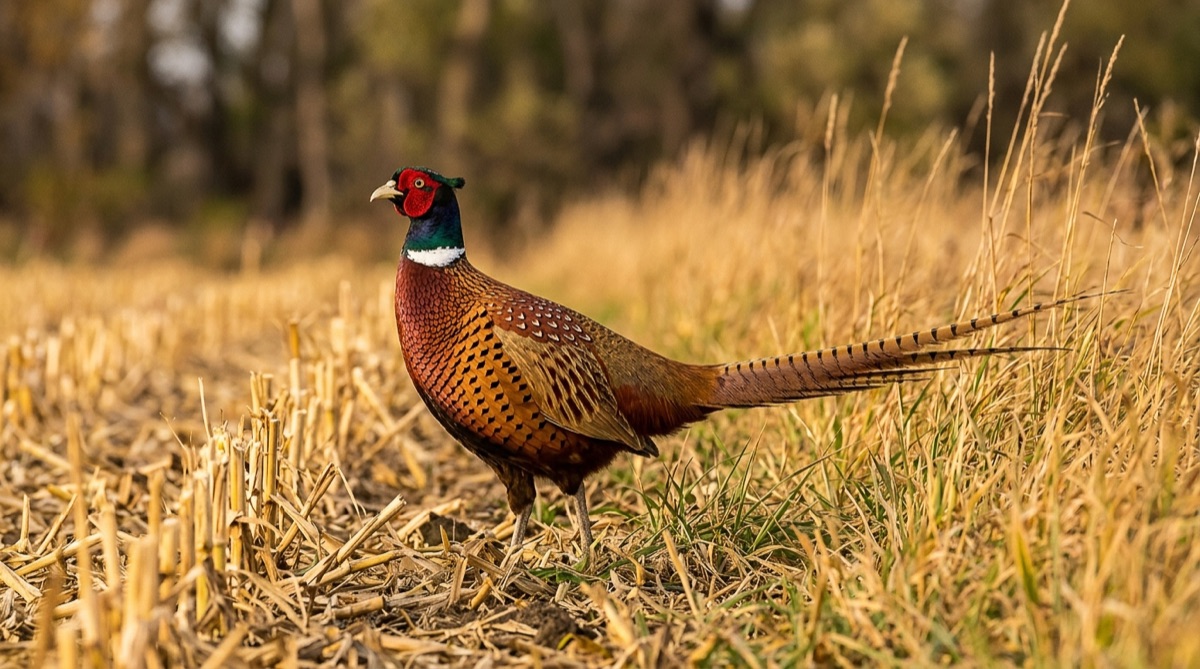
The birds · upland
Phasianus colchicus · ringneck, rooster, longtail
Ring-necked Pheasant.
RUNS, AND GETS WORSE ALL SEASON.
The dog read
RUNS, AND GETS WORSE ALL SEASON.
Roosters are, in onX's phrase, notorious for staying ahead of slower, less driven dogs. Project Upland's honest framing: some birds hunker and hold, some run, and others flush the instant a dog catches scent. By late season Field & Stream notes that after months of pressure birds won't tolerate much, and will flush wild if dogs don't handle them carefully.
THIS IS WHERE A YOUNG DOG LEARNS BAD HABITS.
The dog must learn to trail a runner and pin it rather than push it. Northwoods Bird Dogs is blunt about where pointing dogs fail, they won't hunt a pointing dog where a pheasant is unlikely to ever hold, naming cattail sloughs and standing corn. Grass with breaks in the cover gives a dog somewhere to pin one.
SCENTING: BETTER THAN MOST BIRDS, WORSE EARLY.
Northwoods notes pheasants throw stronger scent than ruffed grouse because they're larger and usually grouped. But warm early-season conditions hurt: Project Upland observes that actively growing grasses and forbs make for less-than-ideal scenting. Work into the wind.
FIRST SNOW IS THE BEST DAY OF THE YEAR.Sources thin
Field & Stream reports birds burrow in and sit tight, and that giving dogs time to work the scent is rewarded with close flushes.
RETRIEVE: A HIT ROOSTER RUNS.
onX notes dogs are crucial when a bird drops in thick cover or runs after being hit. More roosters are lost to poor retrieves than to poor shooting.
Where and when
CRP and native grass, cattail sloughs, shelterbelts, cut corn, brushy ditches, and the transitions between them. In mild early-season weather birds may hold in crop fields; heavy cover matters more as weather hardens. Look for the cover within the cover, the thicker, wetter low spots inside a big field. Flush note: a rooster flushes nearly vertically, reaching close to 40 mph, and normally covers no more than about 600 feet before landing, useful for predicting the re-flush.
Hazards to the dog
- Cattail sloughs, ice underfoot and heavy footing
- Barbed wire on field edges
- Frozen ruts and stubble
- Early-season heat with long dry runs
- Roads at field edges
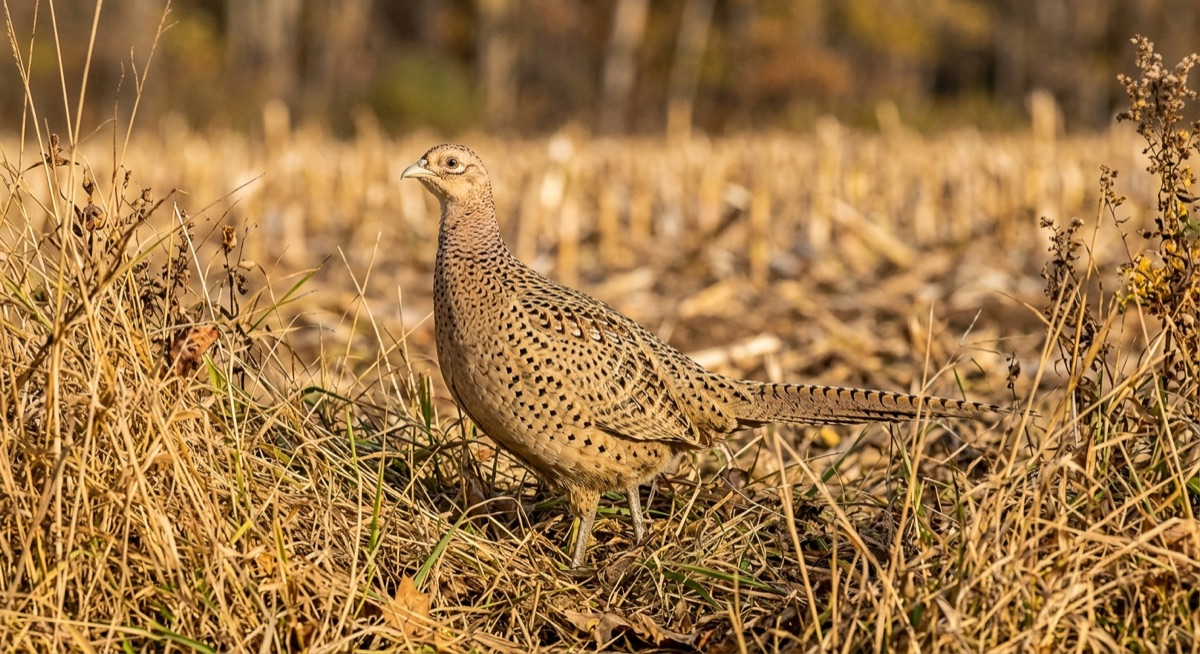 FemaleMale
Sources: Ring-necked Pheasant (Montana FWP) · Ring-necked Pheasant (Washington DFW) · Ring-necked Pheasant (Audubon / Cornell Lab) · Pheasant hunting coverage (Project Upland) · Late-season pheasants (Field & Stream) · Pheasant dog work (Northwoods Bird Dogs) · Pheasant hunting (onX). Reviewed by Chad McClellan. Where sources disagree the page says so; KENAI does not settle a contested read.
The ring-necked pheasant guides.
Three KENAI guides for this bird: first season, second season, the advanced field guide. Give us an email and they open here; you get the Weekly Read with them. Unsubscribe any time.
No spam, ever. Weekly, and only when there is something worth reading.
This bird, in the field, with your dog.
Log a hunt on ring-necked pheasant and the KENAI app opens this read beside your dog’s record, with the morning’s conditions and THE KENAI INDEX for the day. Free to start.
Get the app